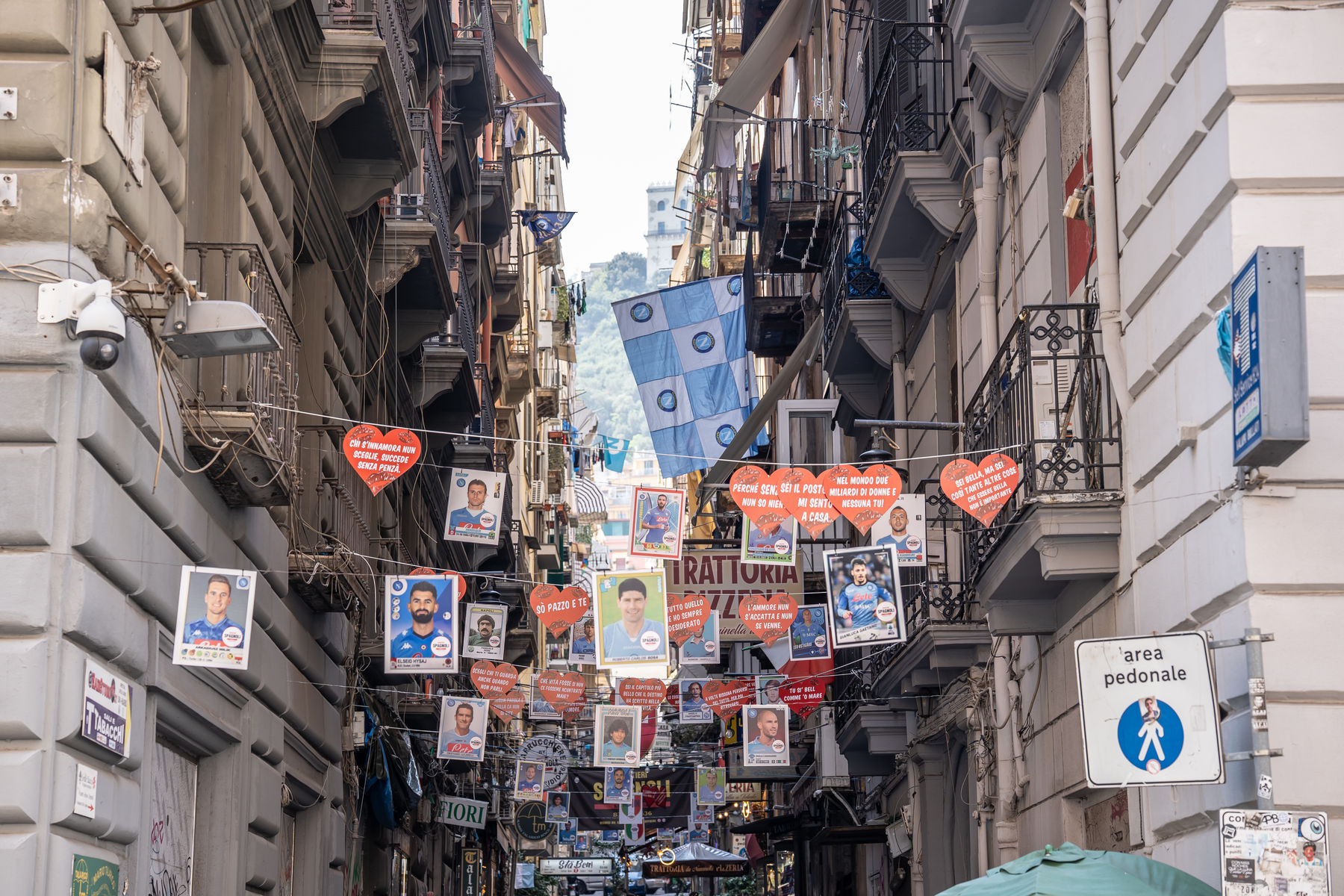
They open up on the west side of via Toledo, a few meters from the front door of the residence, and they’re the part of Naples visitors look at with the most curiosity. The Quartieri Spagnoli (Spanish Quarter) are a vertical maze of sixteen parallel streets and cross alleys, built in the sixteenth century to house the Spanish garrisons. Today they are one of the liveliest places in the city.
What to really expect
The first impression is vertical: tall, narrow buildings, laundry strung between balconies, scooters, votive shrines lit up on every corner. You walk in the middle of the street because sidewalks barely exist, and you go from the shade of an alley to the light of a small square within twenty meters.
It’s a neighborhood lived on the street at every hour: by day there’s constant movement between shops and deliveries, in the evening trattoria tables spill into the alleys. The rhythm changes every hundred meters, and that’s what makes it different from any other part of the center.
What to see
The Maradona mural, in Largo Maradona, has become the most photographed secular pilgrimage site in Naples. Go early in the morning if you want to see it without the crowds.
The votive shrines. There are dozens of them, often dedicated to local saints or to people from the neighborhood, and they tell of a domestic religiosity that has disappeared elsewhere. They’re the detail that stays with you most after a walk here.
Santa Maria Francesca delle Cinque Piaghe, in Vico Tre Re a Toledo: the saint’s house, visited by those praying for the gift of a child, is a quiet place a few steps from the chaos.
The staircases. Climbing toward Montecalvario and Corso Vittorio Emanuele, glimpses of the bay open up that no guidebook mentions, because they’re simply the neighborhood’s own views.
Where and what to eat
This is the area of historic trattorias, the ones with tables on the street and the menu recited out loud. You’ll eat Sunday ragù, genovese, pasta e patate with provola. Prices are low, portions generous, and lunch service ends early: after two o’clock many kitchens close.
For pizza, the Quartieri and the surrounding streets are home to some of the oldest names in the city. The line is part of the experience: you wait standing up and go in when it’s your turn.
Practical tips
Go on foot. By car it’s impossible, by scooter it’s for Neapolitans only. The alleys are meant to be walked, slowly.
Look up. The most beautiful part of the Quartieri is on the upper floors: balconies, arches, laundry, sky framed between buildings.
Ask. People here answer, point, even walk you there. It’s the best way to find the places that aren’t on any map.
A few steps from the residence
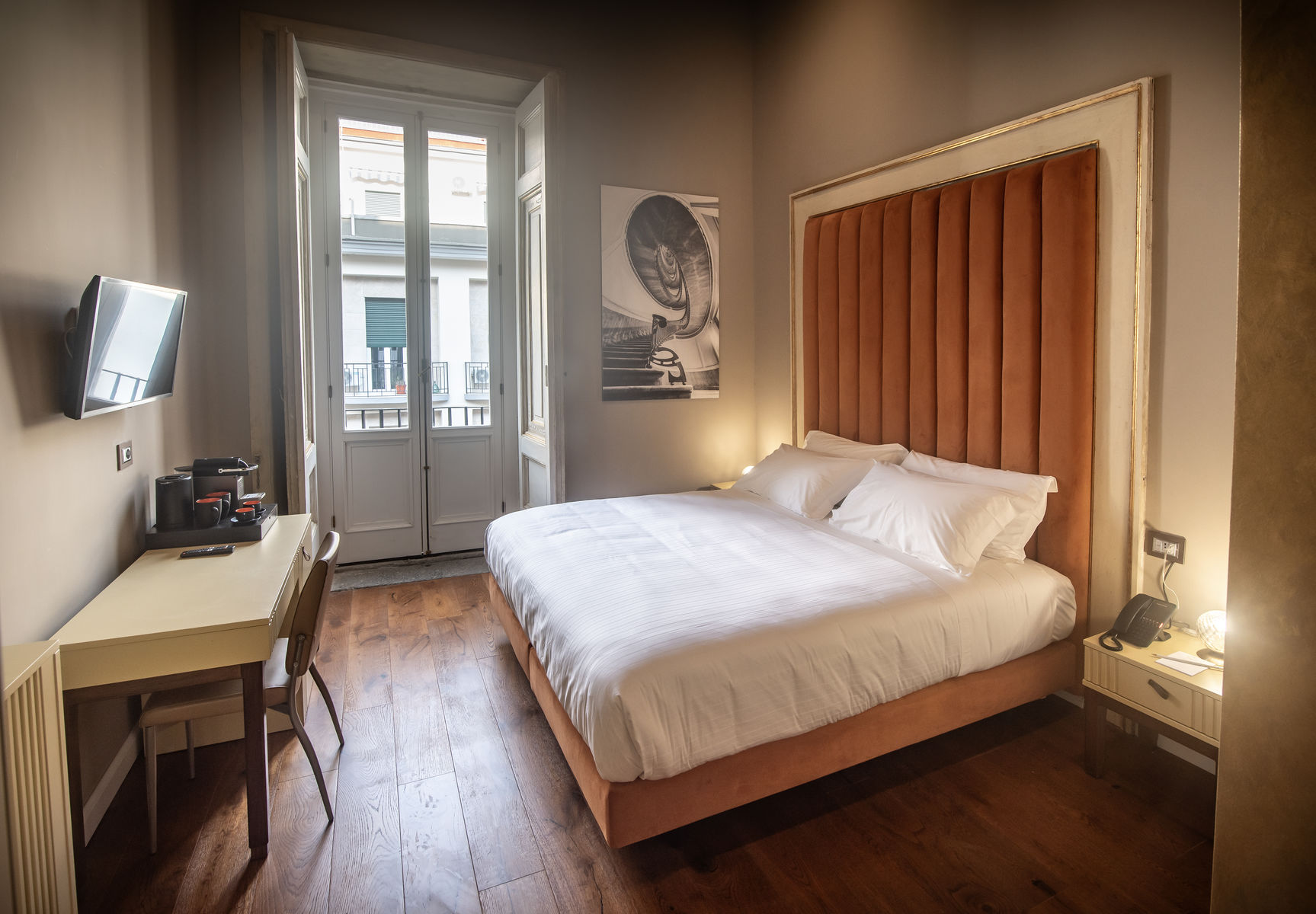
The palazzo that houses Dimora Cavalcanti stands right on the border between via Toledo and the Quartieri: on one side the street of the evening stroll, on the other the maze. The Bagnoli room looks out onto this inner side, the most secluded in the residence.
That’s the advantage of staying here rather than on the outskirts: you can explore the Quartieri at any hour, knowing you’re a five-minute walk from your room.